

Best Time for Lawn Aeration and Overseeding by Grass Type
Aerate and overseed at the wrong time and you waste seed, money, and a season. Seed that lands too early burns out in summer heat. Seed that lands too late never gets established before frost. If you are staring at a thin, compacted lawn right now, timing is the one thing you cannot afford to get wrong. Here is the short answer on the best time for lawn aeration and overseeding .
It depends on your grass. For cool-season grasses like tall fescue and Kentucky bluegrass, early fall, from September through mid-October , is ideal. For warm-season grasses like Bermuda, zoysia, and centipede, aerate in late spring through early summer , once the lawn is fully green and growing. Always aerate first, then overseed right after, so seed drops into the open holes. Here in the Midlands of South Carolina, we have worked on lawns for over 20 years and see the same timing mistakes every season.
Below, we break down the right months for each grass type, explain when it is too late, and show how to sequence the two jobs for the best results.
Why timing matters for aeration and overseeding
What the two jobs do together
Core aeration pulls small plugs of soil out of your lawn, usually 2 to 3 inches deep. That relieves compaction and lets air, water, and fertilizer reach the roots. Overseeding then spreads new seed to thicken thin turf, and the open holes give it the soil contact it needs to germinate.
Neither step helps much if the grass is dormant or stressed. Aeration wounds the turf, and new seedlings need weeks of active growth before they can handle stress. That is why the calendar matters more than the equipment you use.
Soil temperature sets the window
So when should aeration and overseeding be done? When the soil says so. Seed germinates based on soil temperature, not the date. Cool-season seed like tall fescue sprouts best when soil sits around 50 to 65°F . Warm-season seed like Bermuda wants soil above roughly 65°F , plus a long warm stretch afterward to fill in.
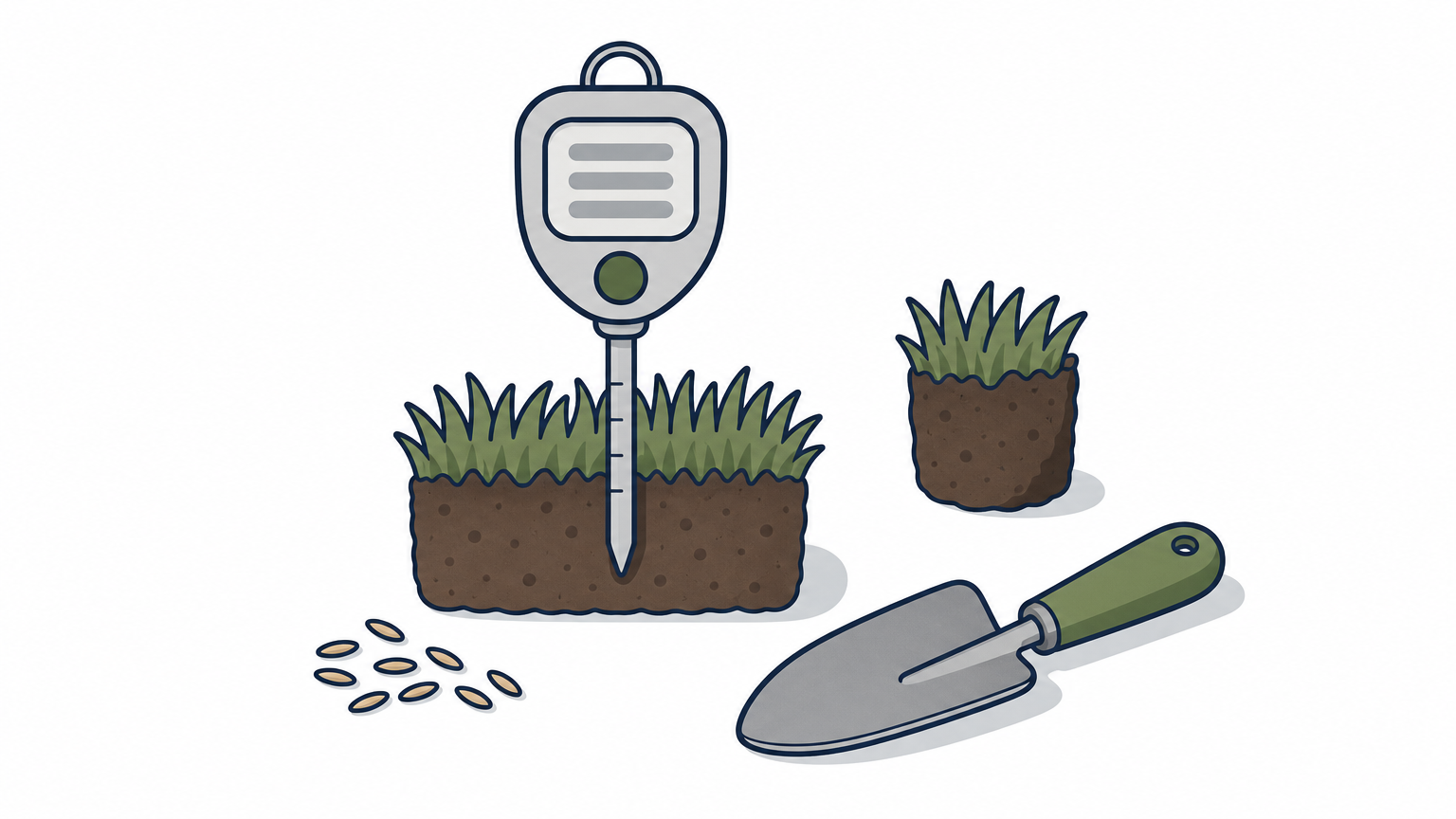
Match the job to your grass's active growing season, not to a date on the calendar.
| Timing | What happens to the seed |
|---|---|
| Too early | Seedlings meet summer heat and drought, then die off |
| Right window | Warm soil, cooler air, and steady moisture build strong roots |
| Too late | Seedlings are too small to survive the first hard frost |
Weeds make the calendar tighter
Weeds follow a schedule too. Crabgrass sprouts in spring once soil reaches about 55°F, so spring overseeding of a cool-season lawn drops tender seedlings into a fight they often lose. Fall has far fewer aggressive weeds , which is one reason it is the best time for core aeration and overseeding on cool-season turf.
Herbicides add another wrinkle. A pre-emergent crabgrass product blocks grass seed as well as weeds, so you cannot spread both at once. Pick your priority for the season, then plan the other job around it.
How to time aeration and overseeding by grass type
Your grass type decides the best time to do aeration and overseeding . Find your species below, then work inside its window .
Quick reference by grass
Each species has a peak growth period, and you want to aerate right as it begins . Seed then lands while the plants can recover fast.
Aerate when your grass is growing fastest, and the lawn heals before stress arrives.
| Grass | Best window | Note |
|---|---|---|
| Tall fescue | September to mid-October | Soil near 50 to 65°F |
| Kentucky bluegrass | September to mid-October | Slow to sprout, so don't wait |
| Bermuda | May to June | Soil above 65°F |
| Zoysia | May to early July | Lawn must be fully green |
| Centipede | May to June | Needs little aeration |
Warm-season quirks
Bermuda and zoysia heal best from aeration in late spring , when growth peaks. Skip fall aeration on them. Dormant turf cannot close the holes, and winter weeds move in.
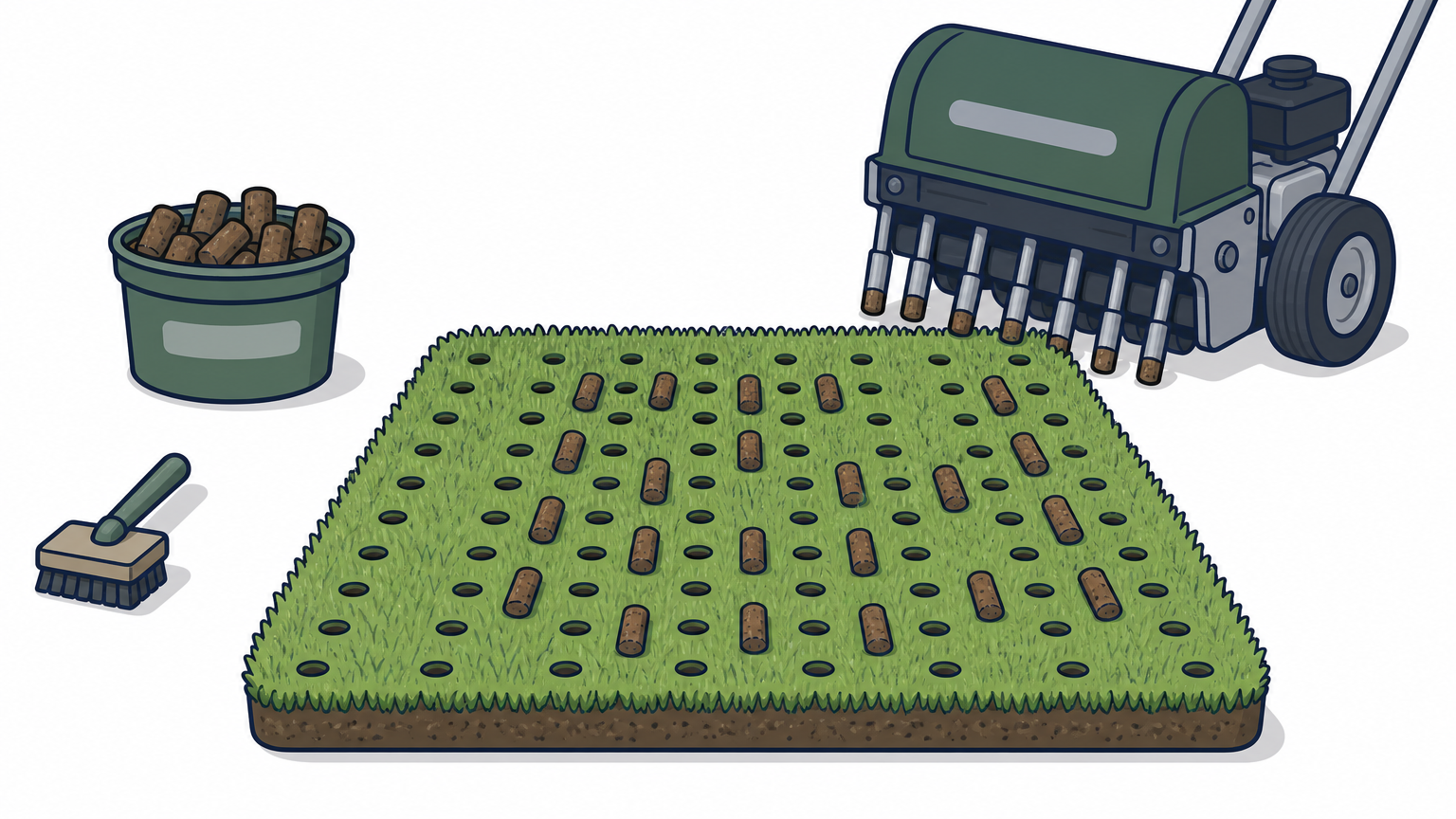
Centipede is the odd one out. It is a light feeder, so aerate it rarely , and seed it only in late spring or early summer.
How to schedule it in Columbia and the Midlands
What the Midlands calendar looks like
Columbia sits in the transition zone , so most lawns here are warm-season grasses like Bermuda, zoysia, and centipede. A few shaded yards run tall fescue. That mix decides when seeding a Midlands lawn should happen locally.
| Grass | Aerate and overseed | Soil target |
|---|---|---|
| Bermuda | Mid-May to June | Above 65°F |
| Zoysia | Late May to early July | Above 65°F |
| Centipede | May to June, only if needed | Above 65°F |
| Tall fescue | Late September to mid-October | 50 to 65°F |
In the Midlands, warm-season lawns get aerated in late spring, and fescue waits for fall.
Local factors that move your date
Heat lingers here. Soil often stays warm into early October, so fescue timing runs a bit later than in northern states. If you are reading this now, your window is open, but do not push past mid-October .
Check the soil, not the calendar, because Columbia's red clay changes how aeration works. An inexpensive soil thermometer pushed 2 inches deep removes the guesswork. Also watch the forecast. Fresh seed needs light daily watering, so avoid a heavy storm that washes it away or a dry stretch that leaves it parched.
When it's too late and when to avoid aerating
Signs you have missed the window
Missing the best time for lawn aeration and overseeding is not a disaster, but you need to know your cutoff. Fescue and bluegrass seed need about six to eight weeks of growth before the first hard frost. In the Midlands, mid-October is the safe cutoff , and anything later is a gamble.
Warm-season lawns run out of time sooner, and reseeding twice doubles what aeration and overseeding costs. Seeding Bermuda or zoysia after midsummer rarely fills in before dormancy, so wait for next May instead of wasting seed.
Seed that can't root before frost is money you'll spend twice.
Conditions that call for skipping aeration
Even inside the right window, some lawns should sit out. Skip the job when any of these apply:
- Drought or heat stress: water deeply first, or wait for rain.
- Saturated soil: the machine smears plugs and leaves ruts.
- Dormant warm-season turf: it can't close the holes.
- New sod or a new seeding: wait until roots are established, usually a full season.
- Fresh pre-emergent: aeration breaks the herbicide barrier.
When in doubt, wait a week or two. A short delay costs little, while aerating stressed turf sets it back and can invite weeds into the open holes.
How to sequence aeration, overseeding, and aftercare
Once you know the best time for aeration and overseeding, the order of the work decides the result. Aerate first, then overseed , ideally on the same day. Seed dropped into fresh holes touches soil and stays put instead of blowing away.
Aerate first and seed second, so every seed lands in an open hole.
The same-day sequence
Follow these steps and you will cover the basics. Water the soil the day before, so the tines pull full plugs.
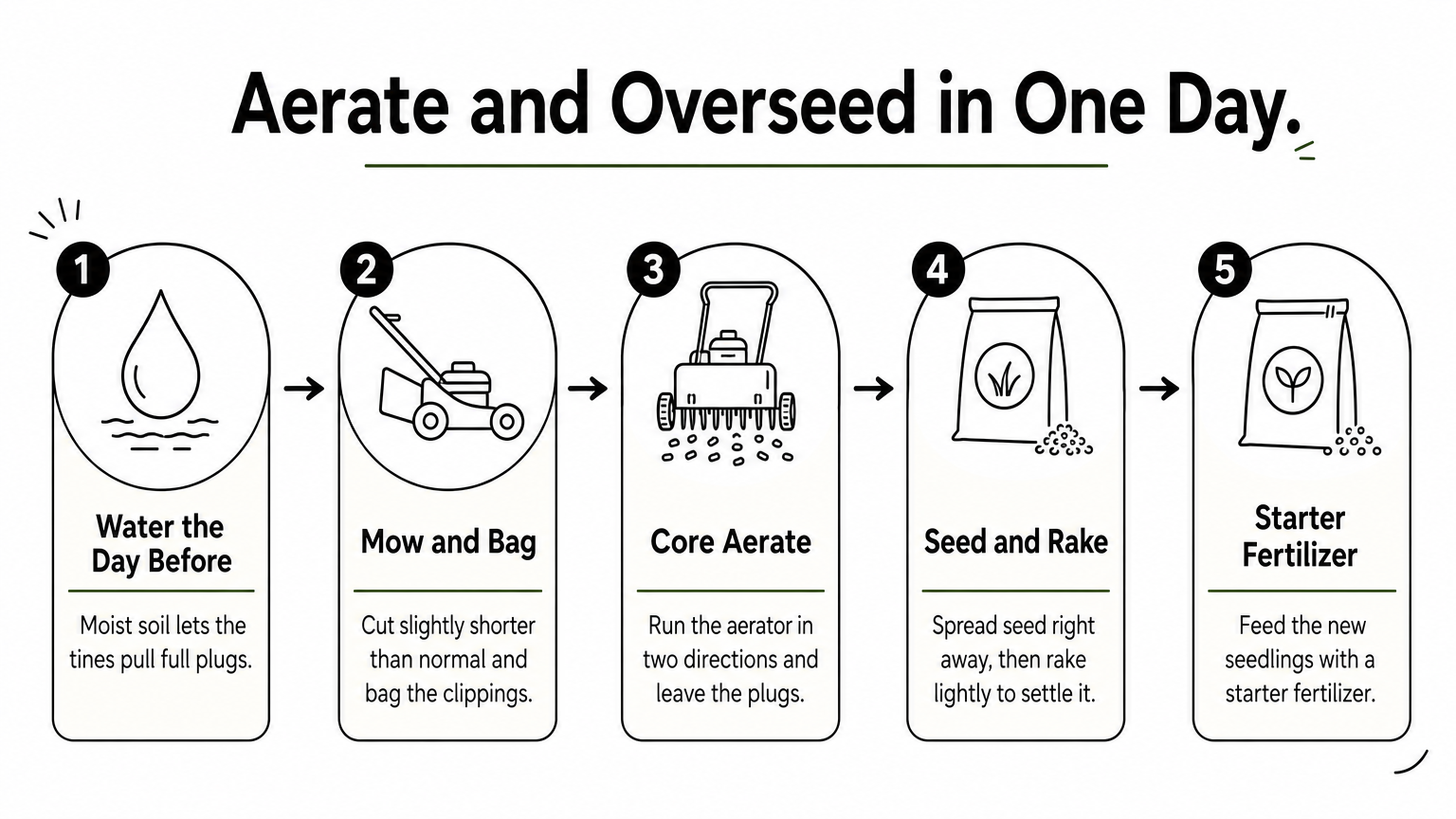
- Mow slightly shorter than normal and bag the clippings.
- Run the core aerator in two directions, and leave the plugs to break down.
- Spread seed right away, then rake lightly to settle it.
- Apply a starter fertilizer to feed the seedlings, then plan the rest of your seasonal feeding schedule around it.
Aftercare for the first six weeks
Watering makes or breaks the job. Keep the top inch of soil damp, not soaked , with light watering two or three times a day until seedlings sprout. Then taper to deeper, less frequent watering so roots chase moisture downward.
Mowing comes next. Wait until new grass reaches the normal cutting height, and keep the blade sharp. Hold off on weed killers until the new turf has been mowed three or four times , since most herbicides stunt seedlings. Limit foot traffic and pets for a few weeks too.
Picking your window with confidence
The best time for lawn aeration and overseeding comes down to your grass and your soil temperature. Cool-season lawns like fescue and bluegrass want September through mid-October . Warm-season lawns like Bermuda, zoysia, and centipede want late spring into early summer , once they are fully green. Aerate first, seed right after, and keep the seedbed damp.
Missing your window costs less than forcing the job. Fescue seed after mid-October is a gamble, and warm-season seed after midsummer is better saved for next May. Waiting a season beats seed that never roots .
If you would rather hand the work to a crew that knows Midlands turf, book core aeration and overseeding services in Columbia with Sparta Lawn Care. We are veteran-owned , have worked local lawns for over 20 years, and back every job with the Sparta Family Guarantee .